Khaled Rouabah
By Siobhan Turner
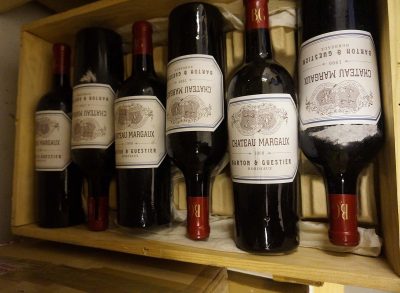
About once a year, sometimes a bit more often, wine circles hear about a “secret” cellar that someone has just miraculously discovered, always in Continental Europe, usually Belgium or Switzerland, occasionally Germany. My ears prick up at such news, and I make sure to alert our clients. Not so they can buy the wines – far from it – but so they know to use extreme caution when considering any wines that may have come from such a source. Are real secret cellars simply a myth? No, not necessarily, but think of them like a bottle of Lafon pre-1996 Meursault approach with extreme caution.
In the late 1990s, a “secret cellar” of a large number of bottles of 1900 Margaux and Lafite came to market through a Belgian wine merchant, Khaled Rouabah, by a marvelous coincidence just in time for the new millennium. The bottles had allegedly been reconditioned and recorked by Barton & Guestier, the famous Bordeaux négociants with the permission of the chateaux. These wines made their way through numerous sources onto the market.
Some had suspicions, however. In 2001, Paul Pontallier, head of Chateaux Margaux intervened to stop an auction of 360 bottles of Margaux at French auction house Tajan (at a per-bottle estimate of €3000), and alerted the French authorities. The French anti-fraud squad sent several bottles to Phillippe Hubert, a physicist at the University of Bordeaux who had developed a technique for measuring Cesium 137 in wine, enabling it to be dated to pre- or post- the atomic era (and, subsequently, to dates before or after specific nuclear accidents, such as Chernobyl and Fukushima). Unfortunately for Rouabah, Hubert’s tests proved that the wines were from post-Hiroshima vintages, almost certainly the 60s and 70s.
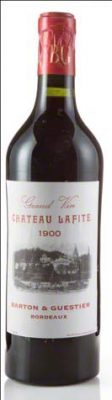
Rouabah claimed that he had simply topped up the wines with later vintages (some Belgian news sources quote him as saying he used 1995) to recondition them, and that this was common practice, although his revised explanation still did not match Hubert’s evidence. What made things more complicated is that he also claimed that Barton & Guestier had recorked the bottles, which they admitted having done. No one, however, would admit to being the source of the statement in the auction catalogue that the reconditioning had been done with the approval of Chateaux Margaux.
The French government charged Rouabah with fraud and counterfeiting, and he was convicted in March 2004. He received a year’s suspended sentence and a €300,000 fine.
Sadly, this is not the end of the story. Although the 360 bottles were seized, several thousand had already been sold, in particular through Durantou, the owners of Chateau l’Eglise-Clinet in Pomerol. We have seen many of these come to the market, sold by merchants who should or could have known better. Sources have included Ginday Imports, The Antique Wine Company (not a surprise)
and, disappointingly, Christie’s New York, who sold these wines at auction even after the fraud had been uncovered and Rouabah convicted.
One bottle (with a Ginday Imports label) also made an appearance at a White Club event – or, rather, at several White Club events, because if the wine in the bottle is fake to start with, why not refill it to get even more fraud for your money?


