Tools of the Trade
Tools of the Trade: A Look Into The Wine Authenticators Tool Kit
By Maureen Downey
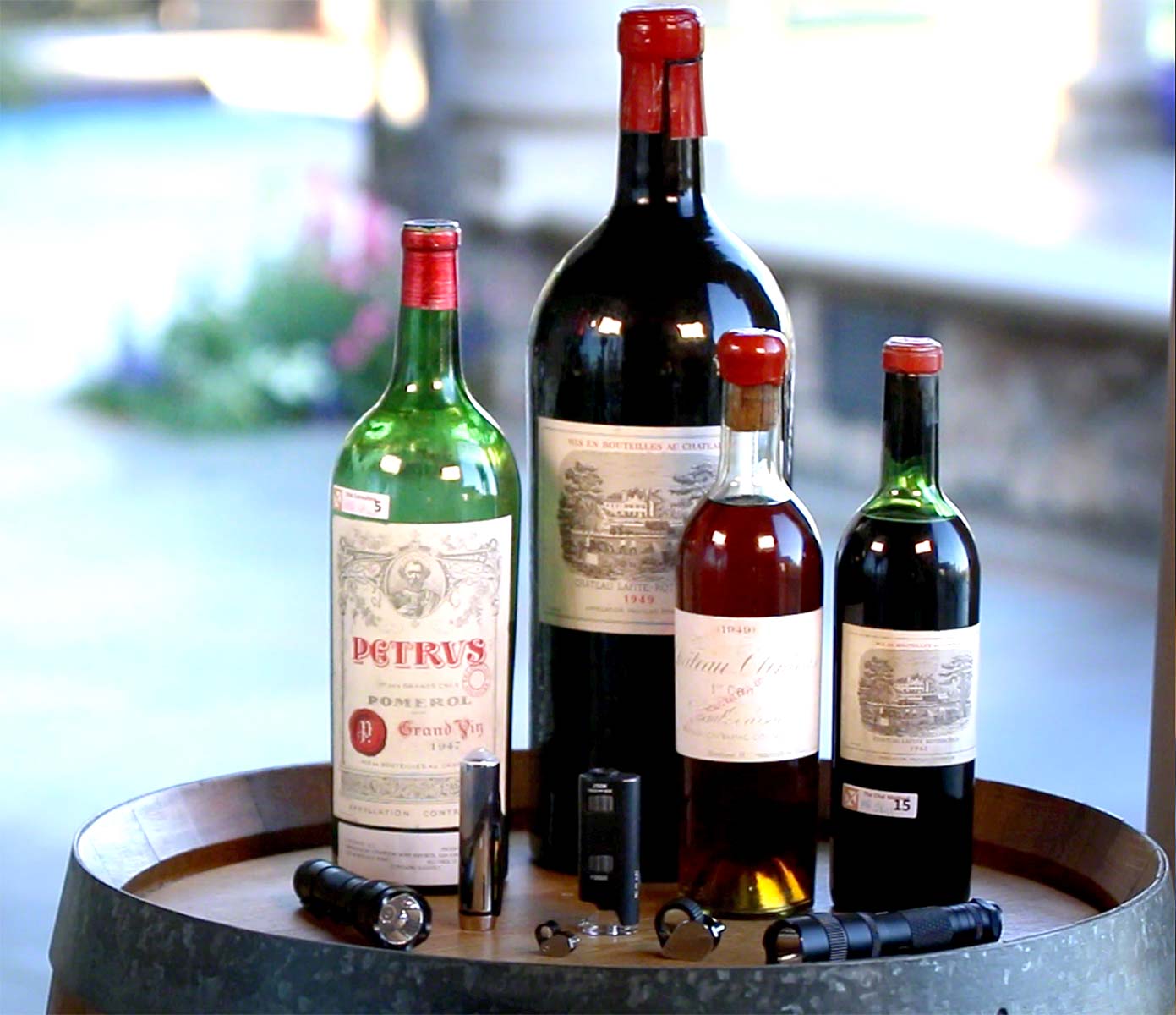
I am frequently asked what tools I use in the authentication process. To shatter the image of the glamorous role of authenticator, in reality it is a combination of heavy tools, sharp blades, and different types of lighting, a host of magnification tools, wet-wipes and lots of spit. Yes, saliva. The best way to keep the typically dirty and often intentionally marred glass under the capsule area wet enough to see through it to look at a cork, is to wet it with spit. Perhaps it is the scuba diver in me, but I have found that there is nothing better than human spit to keep the glass transparent for long enough to make a conclusive finding, or to photograph the brand, or lack thereof. We try to use Wet Wipes, or Clorox Wipes whenever possible, but we inherently find ourselves returning to the basics in a pin
The basics really are a common thread in both the tool kit and the intellectual arsenal of the wine authenticator. First and foremost of the tools needed is education. We cannot stress more the need for a solid base of education. Many, many of those in the trade who have “been in business for years” lack the basic wine regional and appellation, and wine law knowledge to have a clue about wine authentication. Wine knowledge, just like authentication skills are not osmosed. Gaining the required knowledge and skill set to authenticate and sell, buy or represent only authentic wines requires an active and interested party. Keeping abreast of appellation and labeling laws, a strong knowledge of food packaging laws and regulations is essential to catching counterfeiters.
Education & Information
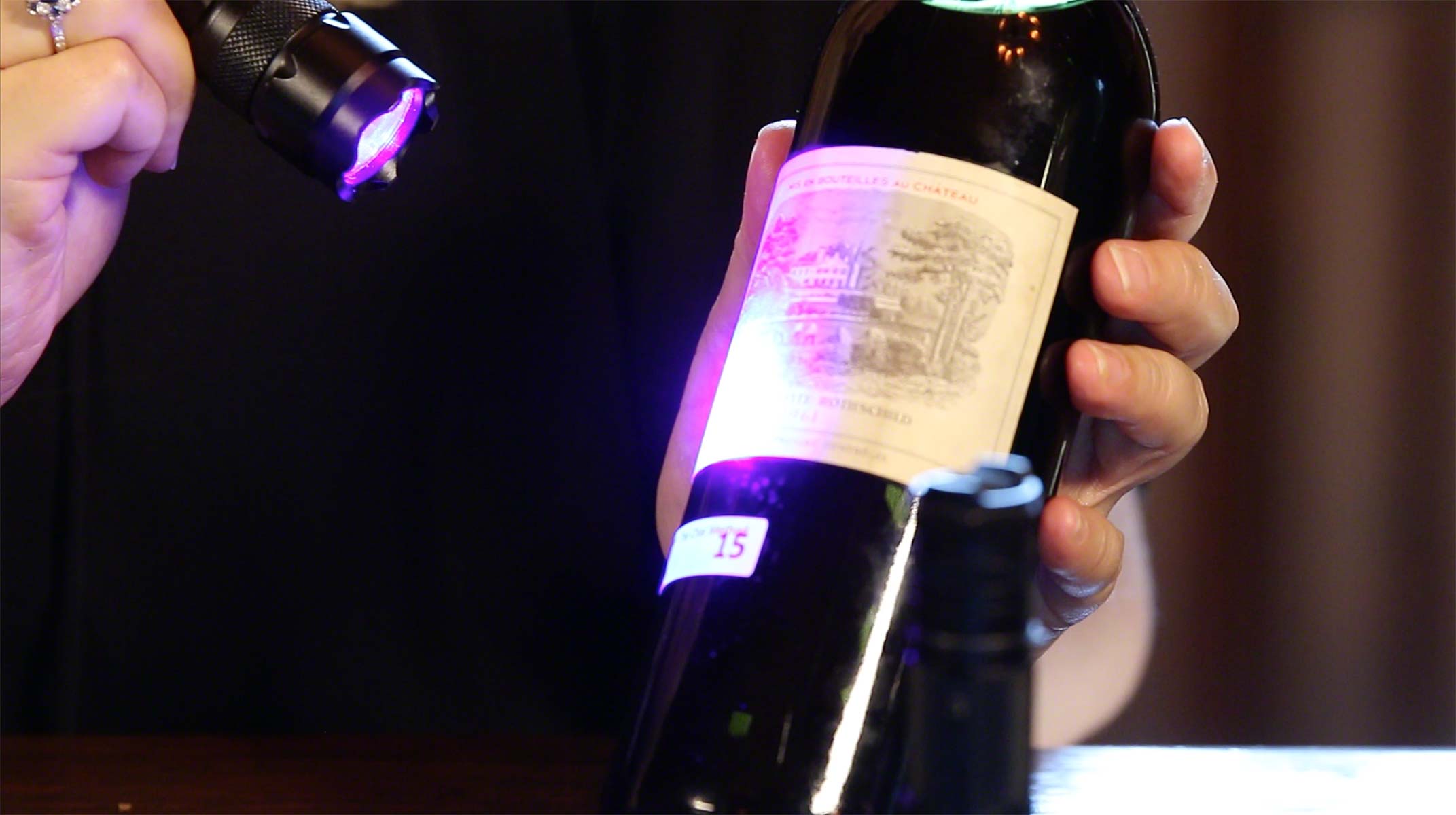
An authenticator of fine and rare wines needs to be educated about wine in general, regions, appellations, and legal requirements that must be on labels. They also need to know about specific relevant producers including their history, changes that affected their individual packaging because of ownership or legal company structure. Further, and unlike sommeliers or other wine professionals, wine authenticators need to be aware of food packaging, shipping and labeling laws, as well as wine law requirements in all markets, and their effective dates. Import laws, requirements and requisite packing changes must be understood. This is a key tool in the authenticator’s arsenal, and fortunately for us counterfeiters frequently miss many of these details.
Basic information about the different parts of the bottle must be mastered to be an effective authenticator. The history and production of glass, paper, glue, capsules, corks, printing and the realities of ageing and oxidation of the different types of capsules and paper are fundamental lesson for a would-be authenticator.
Other than a mastery of relevant wine related and legal topics and their history, producer specific details and eye for detail, many of the counterfeit characteristics that are “tells” of a counterfeit are found using magnification and lighting.
Magnification
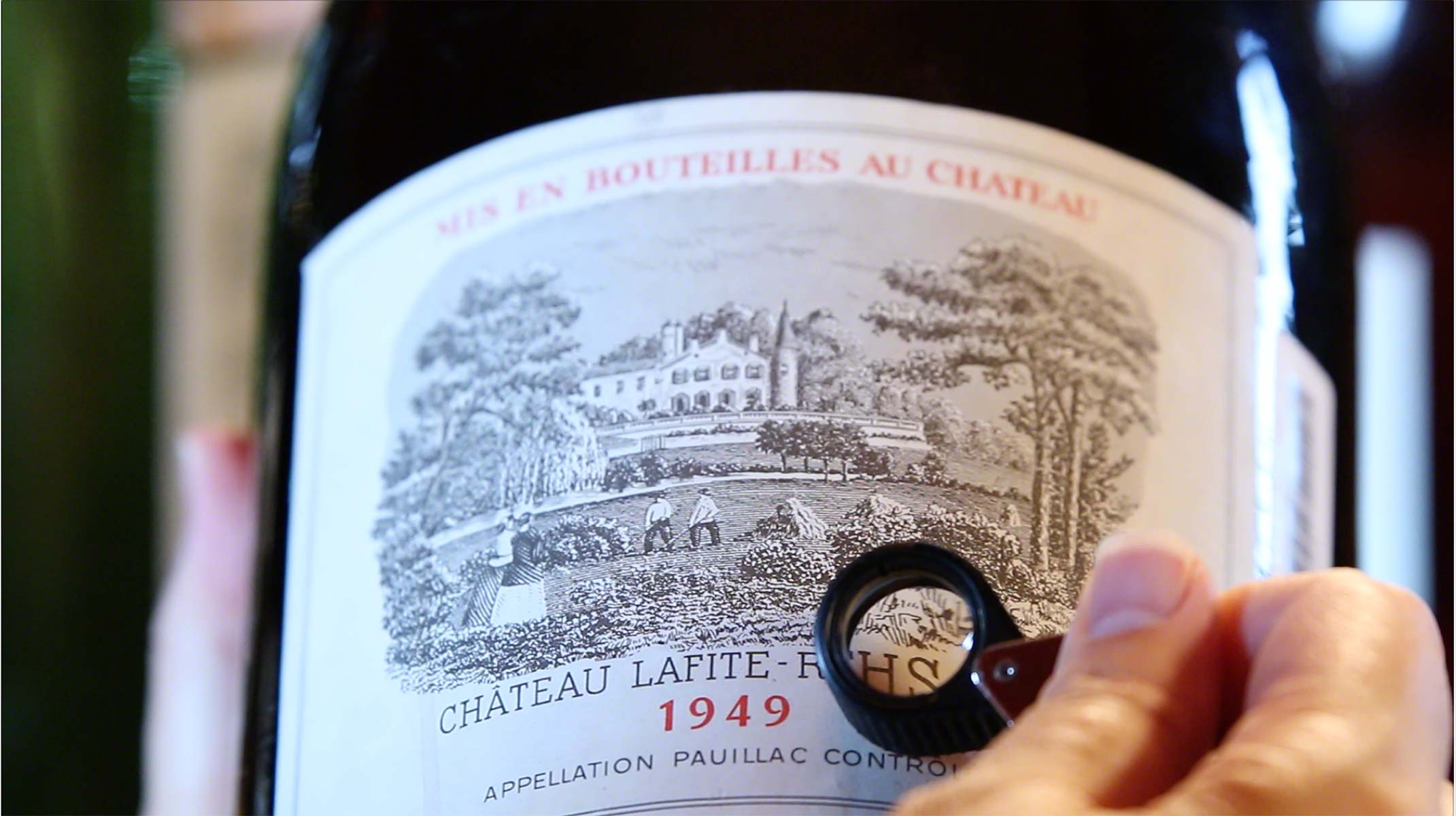
Magnification is key to look at paper and ink characteristics, print method, and ageing characteristics, to determine if glue exists inside the nicks and cuts in labels, and many other details needed to determine authenticity. Because of all the different aspects to inspect closely, a range of magnification strengths is advised. In some instances too much magnification can be as blinding to detail as can too little or no magnification. Thus it is advisable that individuals experiment with magnification of different strengths to see what works for them.
We use a relative arsenal of magnification tools to make sure that we see all details, all aspects and in a way that highlights, without underwhelming or blowing out details needed to support authenticity or inauthenticity.
Here are the magnification tools in my bag:
Jeweler’s Loupes: Traditional: 10x, 20x, 30x
Jeweler’s Loupe: Oversized: 45x22MM Lighted, White and Blue Lights
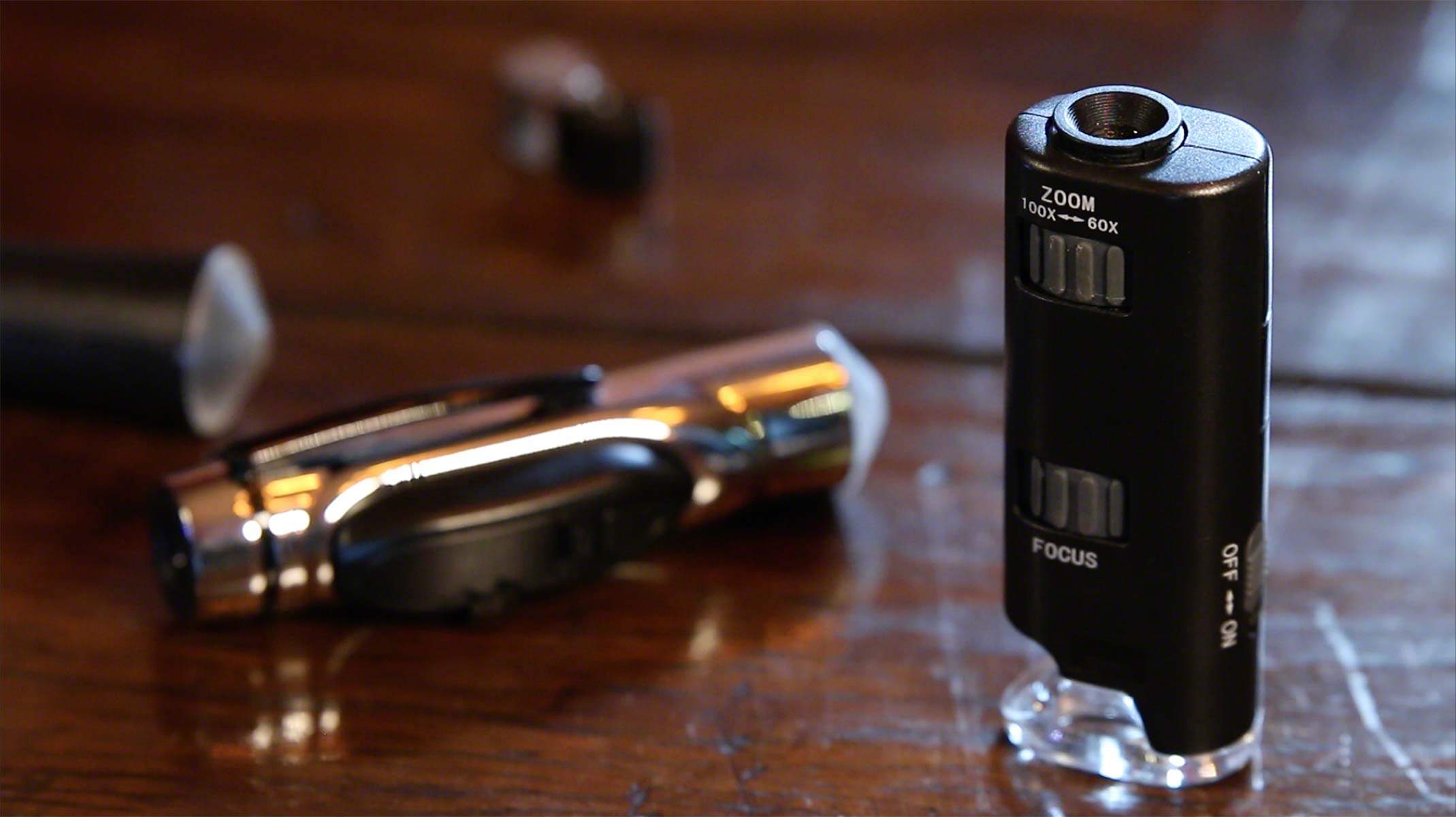
Hand held Microscope: Zoom 60x-100x, Adjustable Focus, Lighted
Lumagny Hand Held: 50x, Lighted
Lumagny Hand Held: 100x, Lighted
Supereyes B008 Handheld USB Digital Microscope: Lighted with Camera and Stand
MiScope: for Wine Fraud 10% discount, please email Meryl at mzweig@zarbeco.com
Lighting
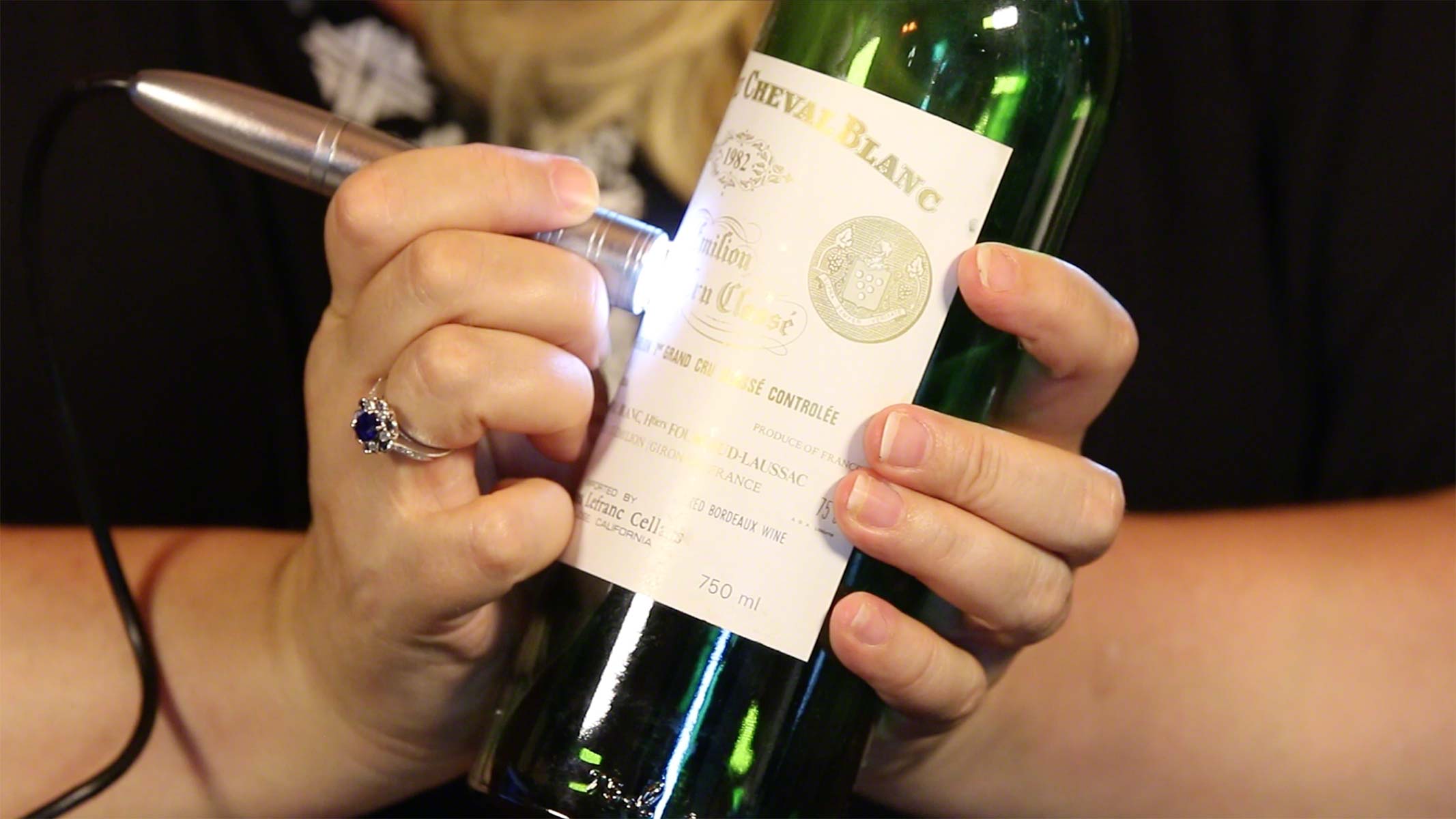
Lighting is important to see the color of the wine and sediment, but is also very important in looking at paper, ageing techniques and glue. Blue and black lights can help to determine production years of both glue and paper, as chemical additions over time have caused both to react in different ways under these lighting sources. The very strong light is useful to see the watermarks of the label paper even through red wine.
My bag includes the following lighting tools, though it is important to note that many of my magnification tools are also lighted:
Blue Light Torch: I use a basic blue light torch.
Hand Held Black Light Torch: I use a number of basic had held black light torches.
Strong, but Compact Torch:
- Smith & Wesson M&P Series Tactical Flashlight
- 275 Lumens on high beam / 30 Lumens in low
HID Torch: 85W HID Xenon Torch Flashlight Spotlight 8500LM Rechargeable 8700mah
Razor Blades
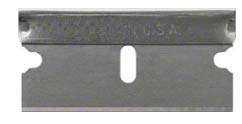
We use sharp blades to cut capsules, scrape off dirt and bin soiling (often intentionally applied by counterfeiters) from bottles and from under capsules to see what it is comprised of and even sometimes check to see if labels are really stickers when they should not be. Scraping off the crud that is applied to mimic age is useful to determine if it actually dirt or some application. Often, glue which is applied under capsules to mask bad corks, and that is very easily determined. Exact-o knives are good, but honestly, nothing is better than an old fashioned razor blade.
Checklist
An important tool we use every single time we look at a bottle, or bottles for authentication is a checklist, which for us is a template outline listing every aspect on which to comment. This systematic approach to authentication ensures we are looking at the same details on every bottle, every time, which can be important when you are doing a repetitive action for hours and days at a time.
We have created a PDF Checklist for members which you can download here: WineFraud.com Authentication Checklist.
Photography
Perhaps one of the most important tools to the Chai Consulting authentication team is the use of photography, and especially professional photography. It can be very challenging, and hasty, to make a determination on the spot about the authenticity of a bottle without going and doing some research and comparison to solidly support your finding. This is why we have amassed such a huge database of photographs and information to compare known correct examples as well as known counterfeit examples.
While most of the time photography alone is not enough for us to make a definitive finding about a particular bottle, if the bottle is photographed by our professional photographer, Myrna Suarez, with whom we have worked for almost 5 years, the photos can be effective. After so much time together, Myrna knows exactly what physical characteristics we need captured to make a determination. This is however not preferred as we feel that physically touching and feeling the bottles plays a key role of the authentication process. It is very important for us to feel the glass, the capsules and the labels as well as looking at the details of ink and print and cork brands or stamps. Unfortunately, social media photos, and other amateur pictures are not comprehensive enough to make a fair determination about a bottles authenticity.
In reporting, the use of large photographic files allows us to point out to clients, and the vendors that sold them bad bottles, exactly why it is we deem bottles suspect or counterfeit, often in very precise, and unquestionable detail. These reports are thus an important tool in our arsenal to assist clients in getting remuneration for bad purchases.
Resources
Without the proper educational background, information and resources to understand what you are looking at, what is important, what is correct, what is questionable and what is wrong, all the tools in the world are no help.
Over the last 15 years, Maureen Downey, and her team have created a database of information, and especially photos of both counterfeit and authentic wines in order to be able to be educated about expectations, but also to use as comparisons as an aid to make determinations or support findings of authenticity.
The Gallery of Authentics, Counterfeit Wines by Producer, Kurniawan Labels and bottles evidence and the galleries of Ink & Print Examples by producer are valuable resources that we use in our jobs as authenticators. We hope that all would be authenticators learn to use these resources to strengthen knowledge and make decisive and accurate findings.
Other Tools in the Tool Kit
Stickers: To identify bottles inspected with an inspection number and the date of inspection. This can be vital when there are many similar items, like a case or two of the same wine and vintage. It is vital to number them to keep track of which bottle is which, especially in reporting.
Rulers: Tall to measure bottles and glass.
Small and flexible, preferably transparent, to measure corks, labels and capsules.
Scotch Tape or Rubber Bands: to close cut capsules
Small Crowbar: To open Original Wooden Cases (OWCs).
Hammer: To help open and close OWCs.
Wrench or Plyers: To pull out tricky nails.
Box Cutters: To open boxes and Original Cartons (OCs).
Packing Tape: To close boxes.
Small Nails: To close any OWCs that need to be resealed.
Wet Wipes or Clorox Wipes: To clean glass under the capsule to see a cork clearly.
Paper Towels: To clean up any messes made.
Table: A proper, sturdy inspection table with adequate lighting and space to line up bottles for comparison.
Batteries, power charges and an extension cord.
WiFi Hot Spot: We carry our own hot spots so that we do not have to burden clients by asking for their WiFi information. Most cellars are not covered in homes and storage