Glass
By Sheri Sauter Morano MW
Archeological evidence points to glass being first created somewhere between 3500 and 3000 BC. It was used for a variety of items including mirrors, windows, utensils and even containers. The Egyptians appear to have been able to produce hollow glass vases by shaping glass around a clay core and the Romans are credited with inventing blown glass, which led to the creation of glass bottles, some of which would have likely been used for wine. While knowledge of glass-making didn’t completely disappear following the fall of the Roman Empire, interest in glass production did noticeably decline in Europe from the 5th century through the Middle Ages (perhaps yet another reason that time period is commonly referred to as the “Dark Ages”).
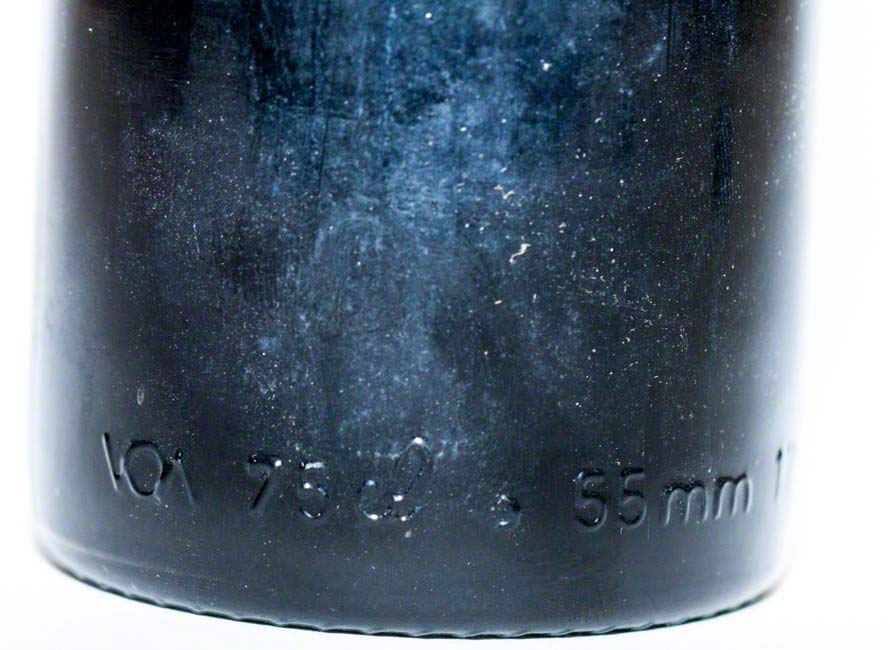
Size Embossing
Fast-forward to the Renaissance and a resurgence of interest in glass products led to a number of improvements in production techniques. Demand for glass grew rapidly over the course of the 17th century – not surprisingly, one of the most popular products being glass windows. But also in demand: glass jugs and bottles. While still very fragile and expensive, it was already clear at this point that there were advantages that glass offered over other materials such as oak casks, clay jugs or flasks made of animal skins for wine storage.
There is a slight chance that we might still be pouring wine from a clay jug or an animal skin flask today were it not for an interesting intersection of national interests and technological innovation. The pivotal point in the history of glass wine bottles occurred in the 17th century when the English government grew alarmed at how the demand for glass was causing a dramatic reduction of available timber due to the amount of wood being used to fuel fires in glass production facilities. As timber was also needed for England’s expanding navy and lucrative ship-building industry, this led to King James outlawing the use of wood-fueled glass furnaces in 1615.
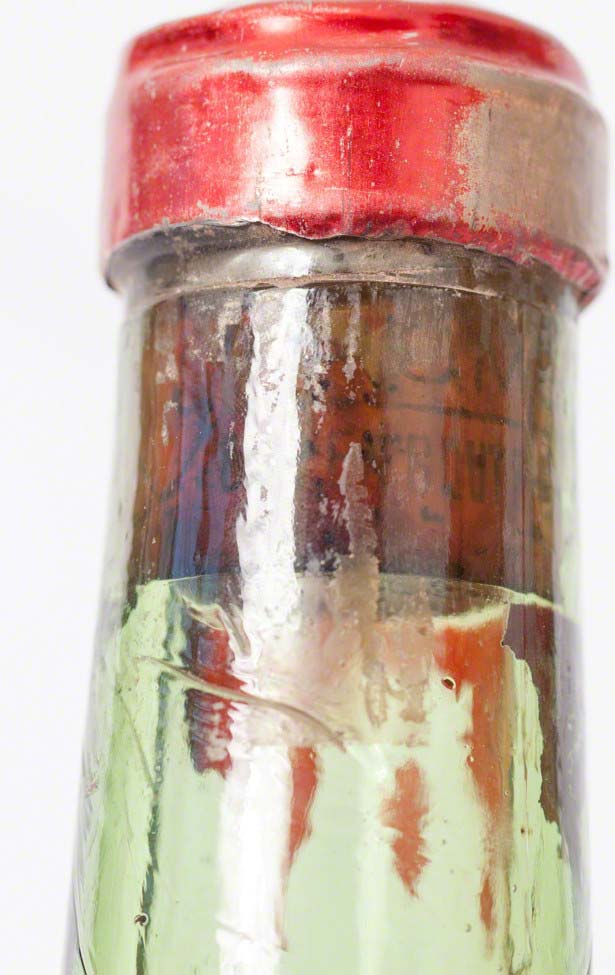
Counterfeit 1950 Petrus Glass, From The Same Case
In order to continue to produce glass, an alternate source of fuel was sought. While it is unknown who started using coal in place of wood, it is known one Sir Robert Mansell bought the exclusive rights for glass-making using coal burning fires and with that monopoly, he controlled the industry until after the English Civil War. While this did allow the English to save their trees (and provide more timber for the Navy), it had an additional very important side benefit. Coal, it turns out, produced a higher temperature than a wood-fueled fire and thus created a stronger glass and therefore a stronger bottle. Further experiments with the mixture used to make glass (sand, potash and lime) coupled with the higher temperature of a coal fire resulted in a darker and less-fragile bottle.
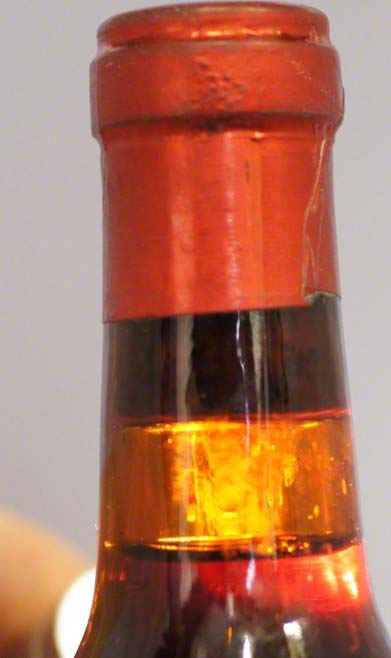
Counterfeit 1950 Petrus Glass, From The Same Case
The invention of a stronger glass bottle was significant to the wine industry for 2 reasons. The first was that it created a new and rather efficient way to age a wine. Glass bottles are inert, meaning they don’t react with the wine in them, and unlike containers like clay jugs, they offer wine protection from oxygen, which is important in preventing it from turning into vinegar. As cork closures became more popular over the course of the 17th and 18th centuries, this also meant that wine could be stored for long-term consumption. While there had long been an understanding that wine quality could vary based on vintage, region and producer (to name a few variables), without the ability to store and age such wines, appreciating their differences was extremely difficult. The development of a small container suitable for long-term aging and maturation quickly changed wine’s status as just a beverage into something much more nuanced.
The second issue of significance was that the creation of a stronger bottle made it possible for a new style of wine to flourish. Up until this point, wines that re-fermented in the bottle created too much pressure for the glass and thus exploding glass bottles were a common hazard. However, the creation of a glass strong enough to withstand the pressure of a secondary fermentation meant that now it was possible for produce sparkling wine (on purpose) – this was, in particular, an important development for the region of Champagne.
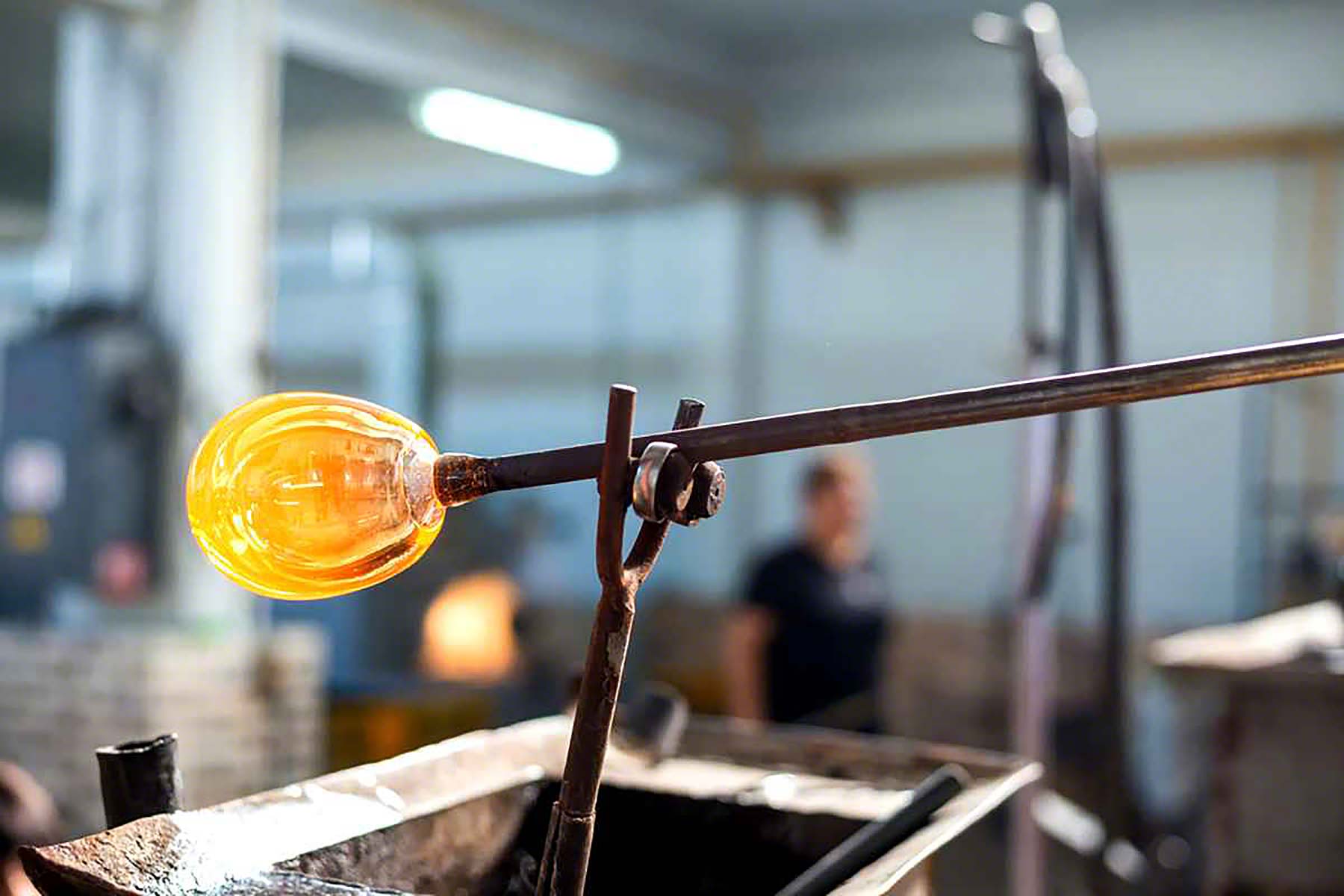
Glass blowing in onion shape
While it would still take a while for wines to be sold in sealed bottles (it was actually illegal to sell wine in bottles in Britain until the 1860s), what was common in the early 18th century was for people to have their own personal bottles filled by a wine merchant and then corked. Part of the resistance to selling wine in bottles had to do with the fact that the shapes of blown bottles varied greatly and obtaining a consistent fill amount was extremely difficult. Bottles started out as fairly bulbous in shape (think onion-shaped) but by the 1730s, it was understood that rounder and longer bottles were easier to stack on their sides and thus better for allowing wines to age. Since corks became the closure of choice, it grew even more important for bottles to be placed on their sides as this position would keep the cork moist and prevent it from drying out. As the manufacturing of bottles became standardized and a method of removing a cork from a bottle was invented (a first mention of the word corkscrew occurred in 1720), it became easier for glass bottles to have a consistent fill level – an important step that would lead to wine being sold in filled and sealed bottles.