Unicorns
The creation and sale of what we call “unicorns” which are bottles that were never made by the alleged producers. These bottles are real only to the counterfeiters, their vendors and victims. While a seasoned authenticator finds these bottles at times hilarious, or howlers, we are reminded that people actually sold these bottles, and that is why we come across them in private collections. We again stress the importance of and need for a solid base of wine education for anyone that wants to be a wine authenticator. Howlers like these bottles that were never made, should never get past the inspection of a responsible expert.
There are many different types of Unicorns.
It is easiest to sort them into the following categories:
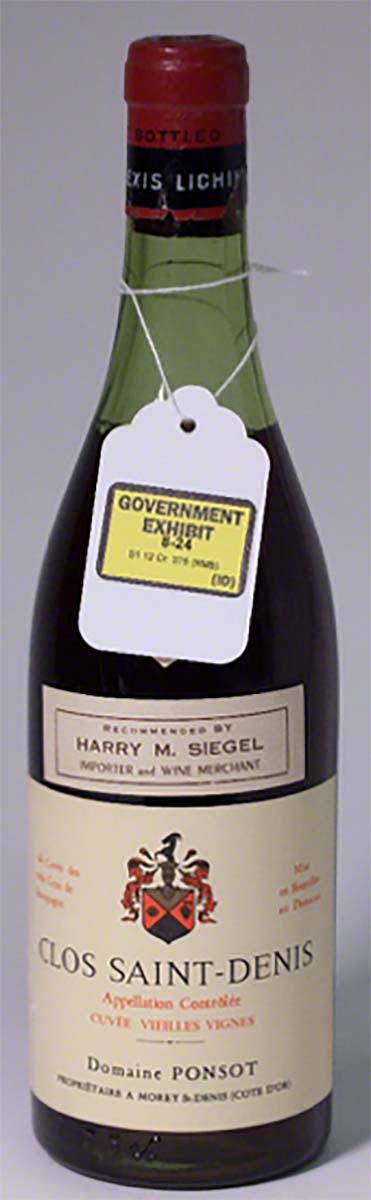
Size- There are many large format bottles on the market that were not made by the producers they purport to represent. Throughout time, bottle sizes have changed in many areas. For example the 5 Liter size was only introduced into Bordeaux with the 1978 vintage, thus 5L bottles from Bordeaux prior to 1978 are automatically problematic.
One example we see time and time again is large format, magnum (1.5Liter) and double magnum (3Liter) bottles of 1945 Domaine de la Romanée-Conti, Romanée-Conti, when in fact the Domaine has stated that they made only six hundred (two barrels) of 750ml bottles. No large formats were produced by the Domaine in that vintage of that wine, and yet there is a person in France making them still and putting them on the market.
Then there are wines that are found today, in formats that are simply not likely because of the history of the production, the likelihood of the production of the large formats, and the likelihood that they still exist IF they were ever made. A perfect example is the many very large, ancient vintages of various wines of Pomerol we see on the market. Pomerol is a region of Bordeaux that was not really recognized as a fine wine area by London connoisseurs in 1957 with the success of the 1955 vintage. Prior to that, the wines of Pomerol were really more country wines that were for everyday drinking, and were not cellared, much less collected and traded, the way their left bank counterparts had been for over a century. Many producers have been quite honest about questioning the existence, or at least the quantities of large format, old Pomerols that are in the market. It is not likely that Petrus produced large formats, and if they did it is not likely that many still exist prior to the 1960’s when Jean-Pierre Mouiex took over ownership from the Loubat family (ownership transfer was in 1961). The tiny production of Château Lafleur has been widely exploited by counterfeiters, especially in magnum and beyond formats. David Molyneux-Berry, MW, researched and in 2007, called out auction house Acker Merrall & Condit for selling more magnums of 1947 Chateau Lafleur than were produced in 1947. In 1947, only 5 magnums were made, but 8 had been sold as of 2007.
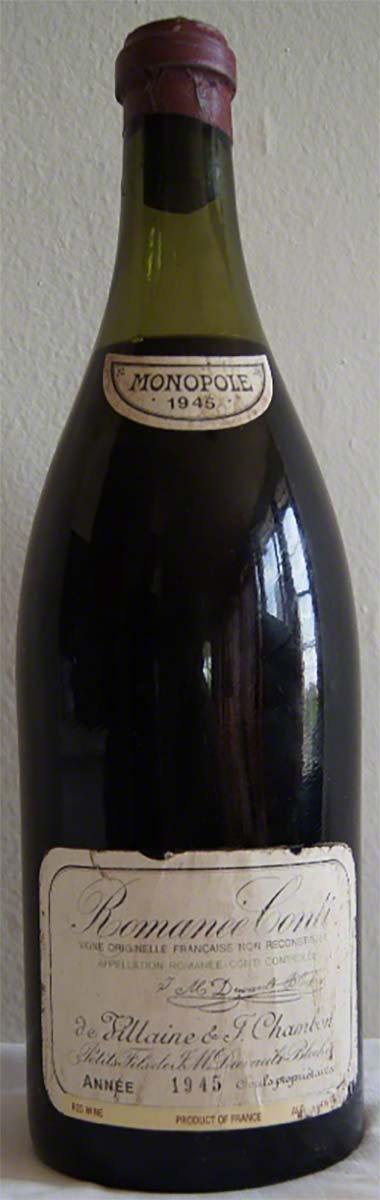
Vintage- There are some vintages that are not made by producers. There may be many reason for this including for example if the quality is not up to producer standards and they declassify their production, or in the event that a vineyard is damaged (the great frost of 1956) or suffers from debilitating virus (Romanée-Conti was ripped out after the 1945 vintage as phylloxera had ravished the vines.) We also have to deal with vintages that are so ancient that the information on the labels in incorrect. For example, Château Lafite-Rothschild was simply Château Lafite until August 8, 1868, when Baron James de Rothschild purchased Château Lafite, and renamed it Château Lafite-Rothschild. Bottles older than 1868, should not be labeled, if they exist and if they have had labels added, anything other than simply Château Lafite.
Vineyard– As discussed in the Vintage section, there are times when producers may declassify, or in regions where they have vineyard designate wines, there are start and sometimes stop dates for those bottlings, and at times producers may not make a particular vineyard in a particular vintage and thus that wine should not exist. Using the above Romanee-Conti example, any bottles of Domaine de la Romanée-Conti, Romanée-Conti from 1946-1949 are counterfeit as the vineyard was ripped out after 1945, was replanted and the wine was not made again until 1950.
Burgundy can be a very tricky region with producers adding and eliminating vineyards from their production with changes to land ownership through death or marriages, as well as purchases and changes to crop sharing contracts of vines, or grower agreements and the related attributes on labels. Counterfeiter, Rudy Kurniawan got caught making and selling wines from two producers from vineyards in the wrong era.
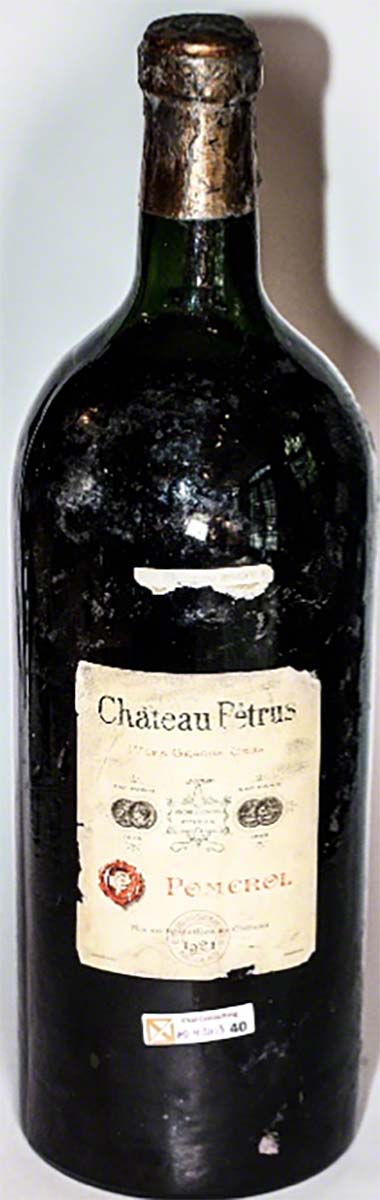
Special Bottling– Special bottlings are a counterfeiter’s, and apologist’s, excuse to explain away every inconsistency and fabrication that exists. Anything that is Vandermeulen, or Nicolas is explained away as being probable. This is not true. It is often found that producers did not sell to a particular negociant, or merchant for bottling in certain time periods. In fact, very old negociant bottles are a huge red flag as they are hard to authenticate, but are so frequently counterfeit that they are rarely worth the risk.