Special Bottlings
Great Bordeaux And Burgundy: Special Bottlings
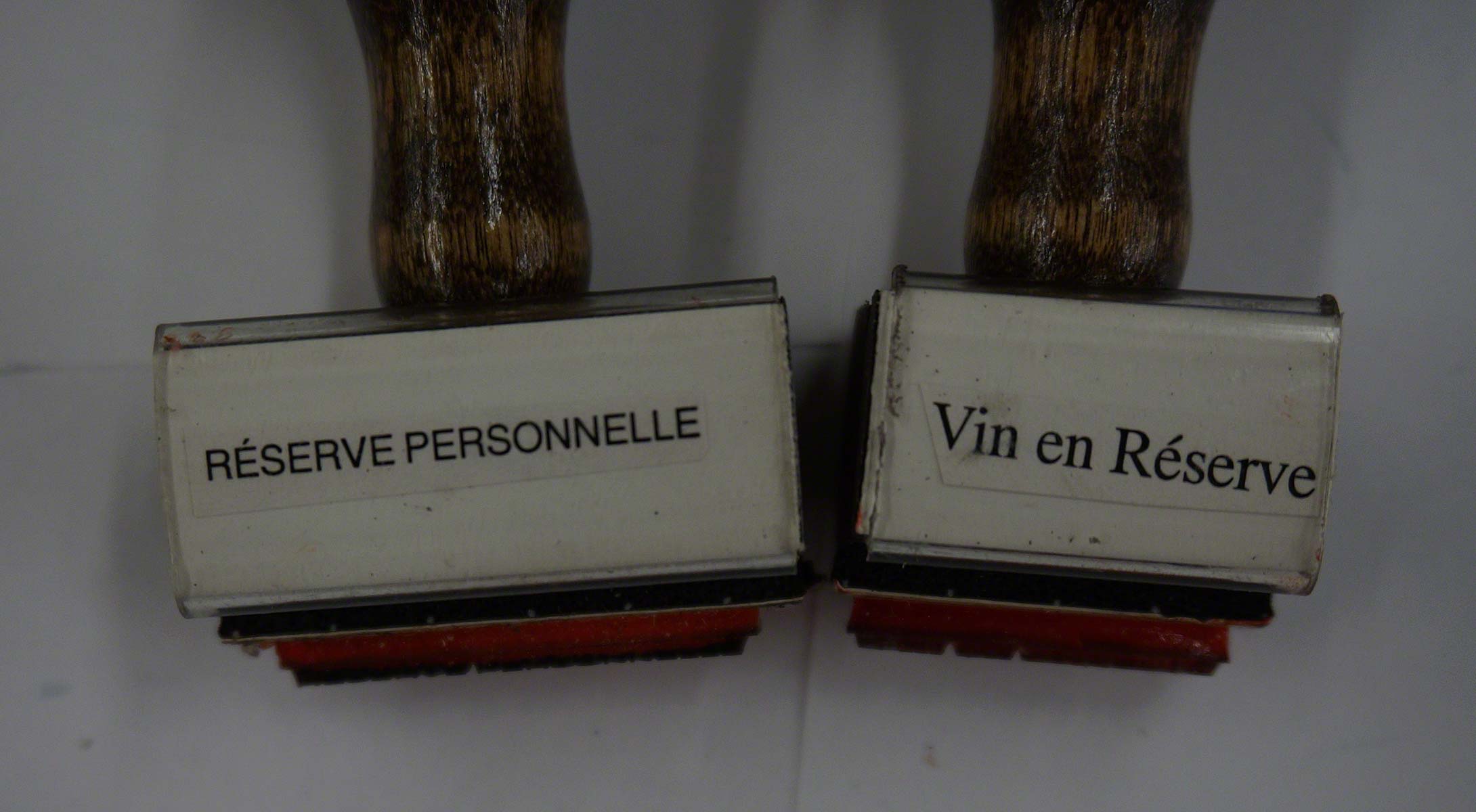
Vin En Reserve Stamp from Kurniawan Evidence
In the past, it was more usual for the great wine estates and domaines to sell and expedite their produce in bulk rather than bottle their wines in situ. The local merchants were masters of the market and they considered that they had the responsibility to age the wine, bottle it, and/or send it in barrels to their customers. As the 20th century progressed, the great châteaus and domaines invested in bottling lines located at the estate and therefore could have more control of the quality and the authenticity of their product. At the beginning, it was not unusual for the châteaus and domaines to do both; i.e., bottle a percentage themselves but still sell the rest in barrels to their customers. This has led to long discussions over the merits of one bottling over another – not necessarily in the château or domaine’s favour! Baron Philippe de Rothschild famously ensured that the entirety of the production of Château Mouton Rothschild was bottled at the Château from 1924 onwards, which has at least simplified matters for this château. Incredibly, it was not until 1973 that it was mandatory for all the First Growths in Bordeaux to bottle their production at the Château. The great Burgundy domaines were even selling all or part of their produce in casks until the 1980s. Therefore, there exists a huge variety of bottlings of these great wines in many locations and countries.
Beginning with Bordeaux, from the 18th century to the mid-20th century, the Bordeaux merchants, not the châteaus, had the financial clout to control the market and therefore influence the prices and conditions of sale. The Bordeaux wine merchants would take delivery of the wine in casks when it was between 6 and 8 months old, and it would be their responsibility to rack and fine the wine.
They then had the choice of bottling it or keeping it in cask, depending on their client’s orders. During the 19th century, it was more common for wine to be sold and expedited in barrels rather than in bottles, given the costly and hazardous long-distance transportation of wine in bottles. At this time, château bottling was performed only upon special request from the consumer and certainly was not done for the entire harvest. A good indication of how important the
Bordeaux merchants were considered is exemplified when, at the beginning of the 20th century, they seriously lobbied for the entirety of the harvest to be bottled away from the château, citing the châteaus’ incompetence to perform this task!
This is a selection of the very important Bordeaux wine merchants who regularly purchased wine in casks directly from the Bordeaux First Growths and other Classified Growths in the 19th and 20th centuries. It would not be a surprise to find their names featured prominently on the labels of wines that they bottled or sent to the importers in casks:
Barton & Guestier (established 1725)
Nathaniel Johnston & Fils (established 1734)
Schröder & Schÿler (established 1739)
Hanappier-Peyrelongue & Co (established 1817)
Cruse et Fils (established 1819)
de Luze et Fils (established 1820)
Maison Sichel (established 1883)
Ginestet & Cie (established 1897)
Mähler-Besse (established 1905)
The above merchants could be trusted to sell Classified Growths that were well looked after and genuine. It must be remembered that the phylloxera and soil disease epidemics in the latter part of the 19th century, together with a great world recession, hindered the chateaus’ ability to invest in vinification equipment and personnel, hence their greater dependency on the Bordeaux wine trade. Although the situation improved in the first decade of the 20th century, World War I was another set back for them and, broadly speaking, the classified growths only began significant bottling at the château in the 1920s, even though some had made a start in the 10 years leading up to the World War I. The great majority of First Growths not bottled at the Château that I have seen from the 19th and 20th century were bottled by the Bordeaux wine merchants, as cited earlier.
If we take the case of Château Lafite Rothschild, it is generally agreed that 1847 was the first vintage where at least part of the harvest was château bottled, although some say that a small quantity was bottled at the château even earlier, in 1797. Other years where there was at least some château bottling were 1858, 1864, 1875, 1875, 1878, and 1880. Most of the 1869 vintage was château bottled. It is stated that there was no château bottling at all between 1885 and 1906. Therefore, the situation in the 18th and 19th centuries was that bottling of Château Lafite Rothschild more often than not occurred elsewhere than at the château.
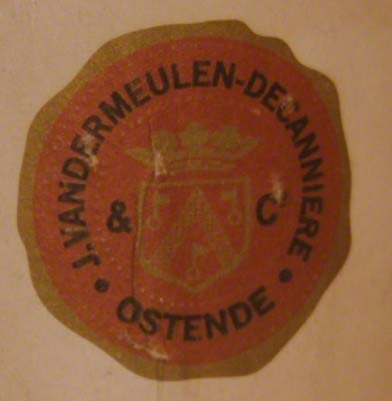
Vandermeulen, Belgian Negociant is oft used as a cover for counterfeits
In Burgundy, the incidence of bottling at the domaine was extremely rare in the 19th and for much of the 20th century. The low prices and consequent lack of investment, let alone lack of space in many instances, for the installation of a fully functioning vinification and bottling emplacement meant that the majority of the growers had to sell their produce in casks and sometimes the grapes themselves. During my many cellar inspections in Europe, I came across so many bottles from the 1920s to the 1950s with merchant rather than grower labels. Many of the merchants were obscure and are now no longer in existence. If the grower was renowned enough, the merchant would vinify and bottle his wine separately and mention the grower’s name on the label (Remoissenet Père et Fils bottled the single vineyard produce from such domaines as Roumier, de Vogüé, Comtes de Lafon, and Marey-Monge), if not, then the resultant wine would have been blended with other wines made from the same vineyard. One notable exception to this is the Domaine de la Romanée Conti, which has always been bottled at the Domaine (although there exists a quantity of Vandermeulen- bottled Romanée Conti 1923, which has been an ongoing polemic). Notwithstanding the merchant-bottled great Burgundies, there are many other variants discussed later in this article.
Because there has always been a significant export market for Bordeaux and Burgundy, there are many bottlings made in other countries. The principal importers who have bottled these wines are the United Kingdom (UK), Belgium, Denmark, and Germany.
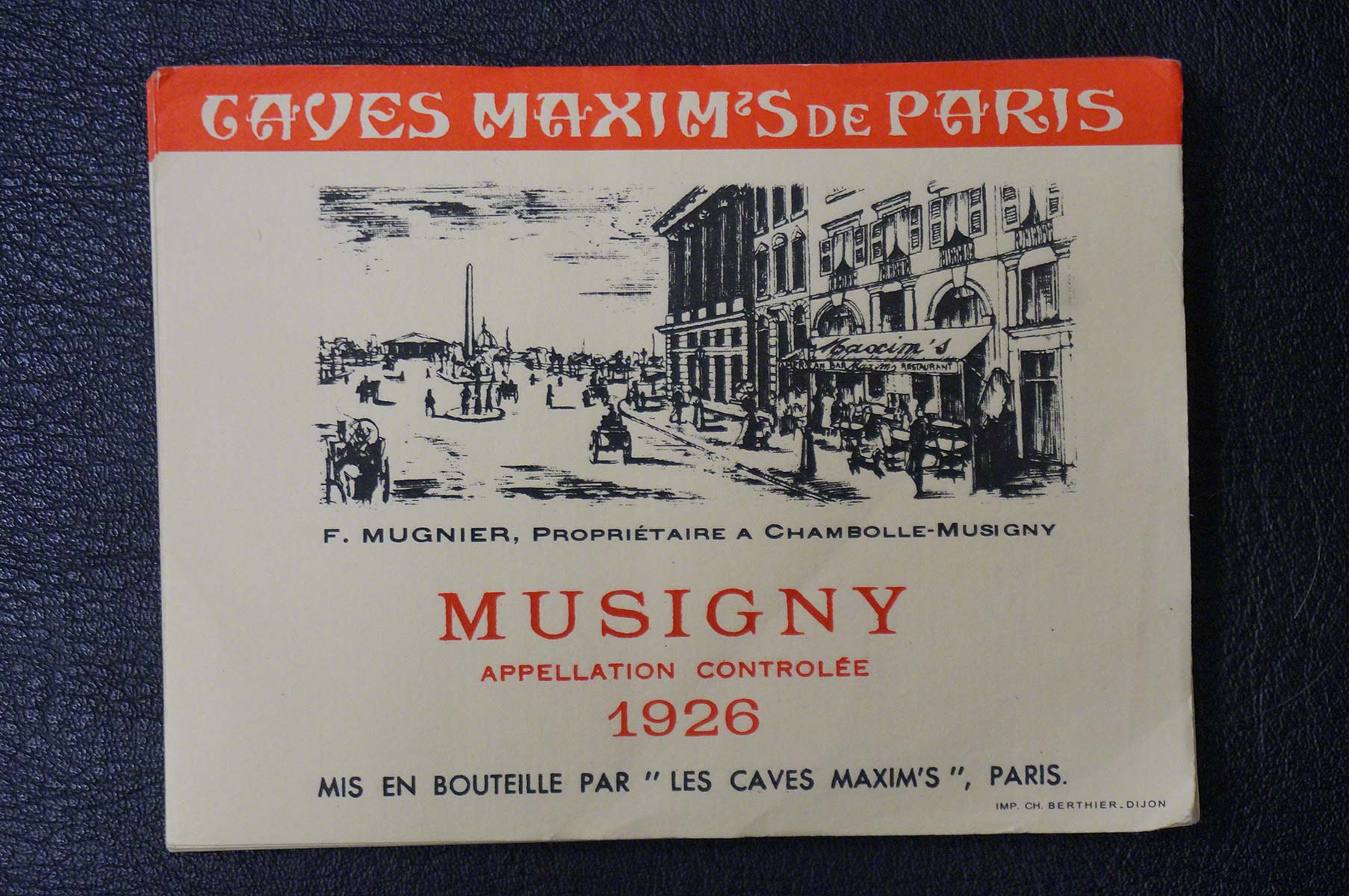
Counterfeit Label from Kurniawan Evidence
The UK has been a major importer of the Bordeaux classified growths since the end of the Napoleonic Wars and also a significant importer of Grand and Premier Cru Burgundies. It is not surprising, given the sale of wine in cask or bulk, that there are many UK bottlings in existence. However, I have seen very few UK bottlings of First Growths apart from Château Margaux, Château Cheval Blanc, and Château Ausone, and a smattering of Château d’Yquem. Other Bordeaux classified growths were regularly bottled in the UK, mainly during the interwar period until the early 1970s. Equally, there are many Grand and Premier Cru Burgundies that have been bottled in the UK during the same period. These are mainly only vineyard specific and the Burgundy domaine or merchant name is not mentioned on the label. The UK wine merchants generally had their own labels printed. The merchant’s trademark would usually be the major feature on the label, followed by the wine description. There has always been an important glass industry in the UK; therefore, it made economic sense to import wine in bulk for it to be bottled nearby. In London, there were major bottle manufacturing plants such as the Charlton glassworks and the City Glass bottle company in Canning Town. In Bristol, Rawlings continues to manufacture bottles for the wine industry. It is fairly simple to distinguish a UK bottling against a French bottling – the glass colour is usually a bluer hue of green as opposed to the French olive green.
The following is a list (not exhaustive) of the major UK merchants who have bottled top Bordeaux and Burgundy:
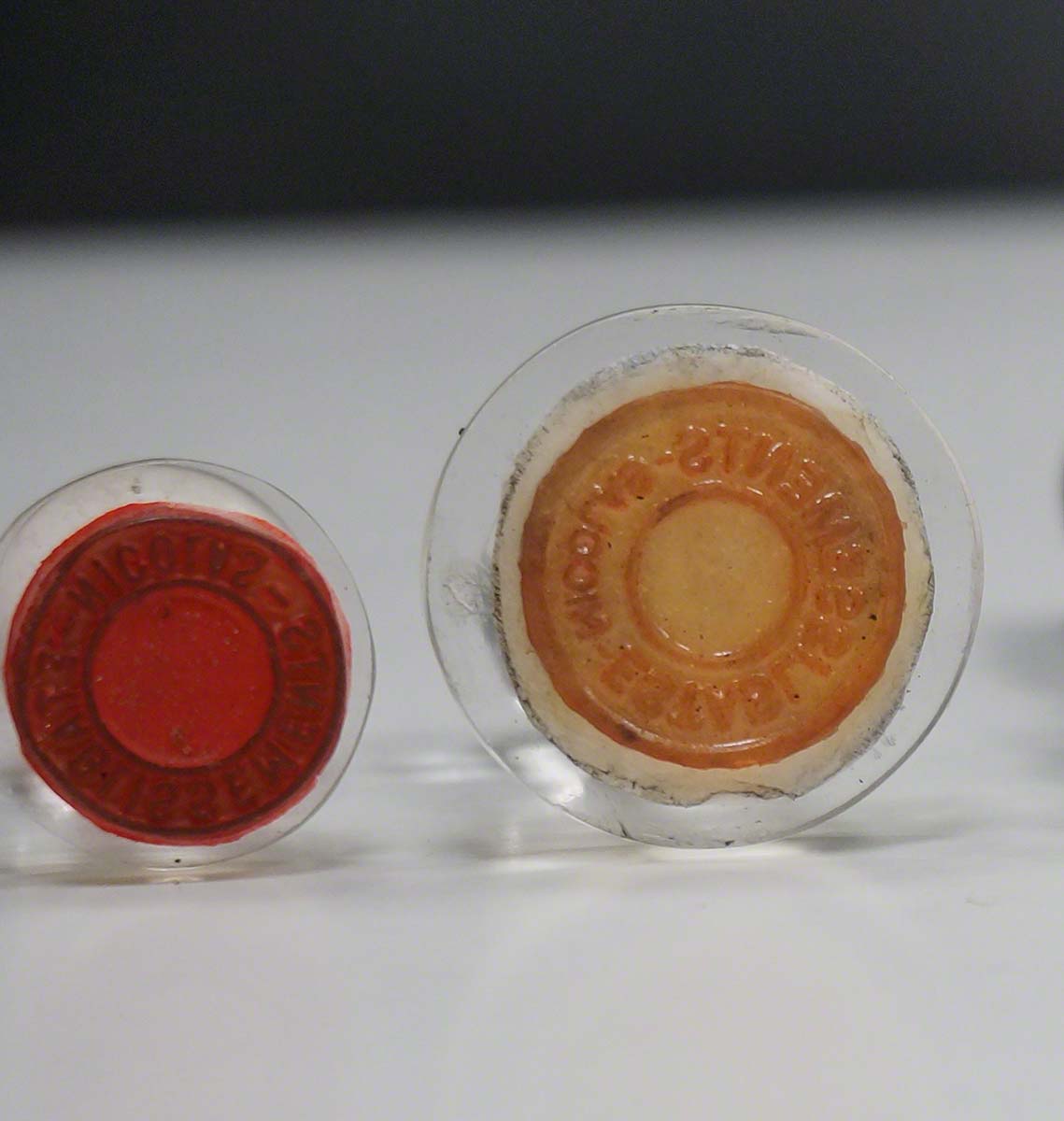
Rudy Kurniawan Nicolas Stamps for Labels
In London:
Berry Brothers & Rudd (established 1698)
Justerini & Brooks (established 1749)
Hedges & Butler (established 1667)
Corney & Barrow (established 1780)
In Bristol:
Avery’s (established 1793)
John Harvey and Sons (established 1796)
Elsewhere:
The Wine Society (established 1874)
For its small size, Belgium has been and remains a major importer of Bordeaux and Burgundy. There are many Belgian bottlings, which really began in the 1920s. Almost invariably, the glass is brown so it is readily distinguishable. As a rule of thumb, most Burgundy was imported by the Southern, French-speaking part of Belgium; la Wallonie. Bordeaux went to the Northern, Flemish-speaking part; Flanders. The Belgians have always had a penchant for Saint Emilion and Pomerol, and more of the latter went to Belgium than anywhere else during the 1930s, 1940s, and 1950s. It is not surprising to find a wide variety of Belgian bottled Bordeaux, especially from the right bank, notably Château Pétrus, Château Lafleur, Château Trotanoy, and Château Cheval Blanc.
Perhaps the best-known Belgian merchant that bottled top Bordeaux and Burgundy was Vandermeulen, based in Ostend. This is due to the bottlings of Château Pétrus, Château Cheval Blanc, Château Lafleur, and Château d’Yquem (1921, 1947, and 1952 vintages in particular) that have regularly appeared at auction during the past 30 years or so. I used to catalogue hundreds if not thousands of this merchant’s bottlings in old private cellars in and around the Gent and Ostend areas.
Other notable Belgian merchants that bottled top Bordeaux and Burgundy are as follows:
Jacques Feys, still based in Bruges
Grafé Lecocq, still based in Namur
H G Lafite, (was based in Brussels)
Pol Mairesse (was based in Antwerp)
Although Danish and German importers also bottled top Bordeaux and Burgundy, they come onto the market more rarely and their names seldom appear on the capsules or bottles. For Bordeaux, the shape of Danish and German bottles is slightly squatter and shorter than French bottlings. Also, the glass is generally lighter and a brighter green.
In Denmark, Frederiksberg (established 1911) in Storskov is one merchant that bottled Bordeaux and Burgundy. P J Valkenberg in Worms, Germany, is another.
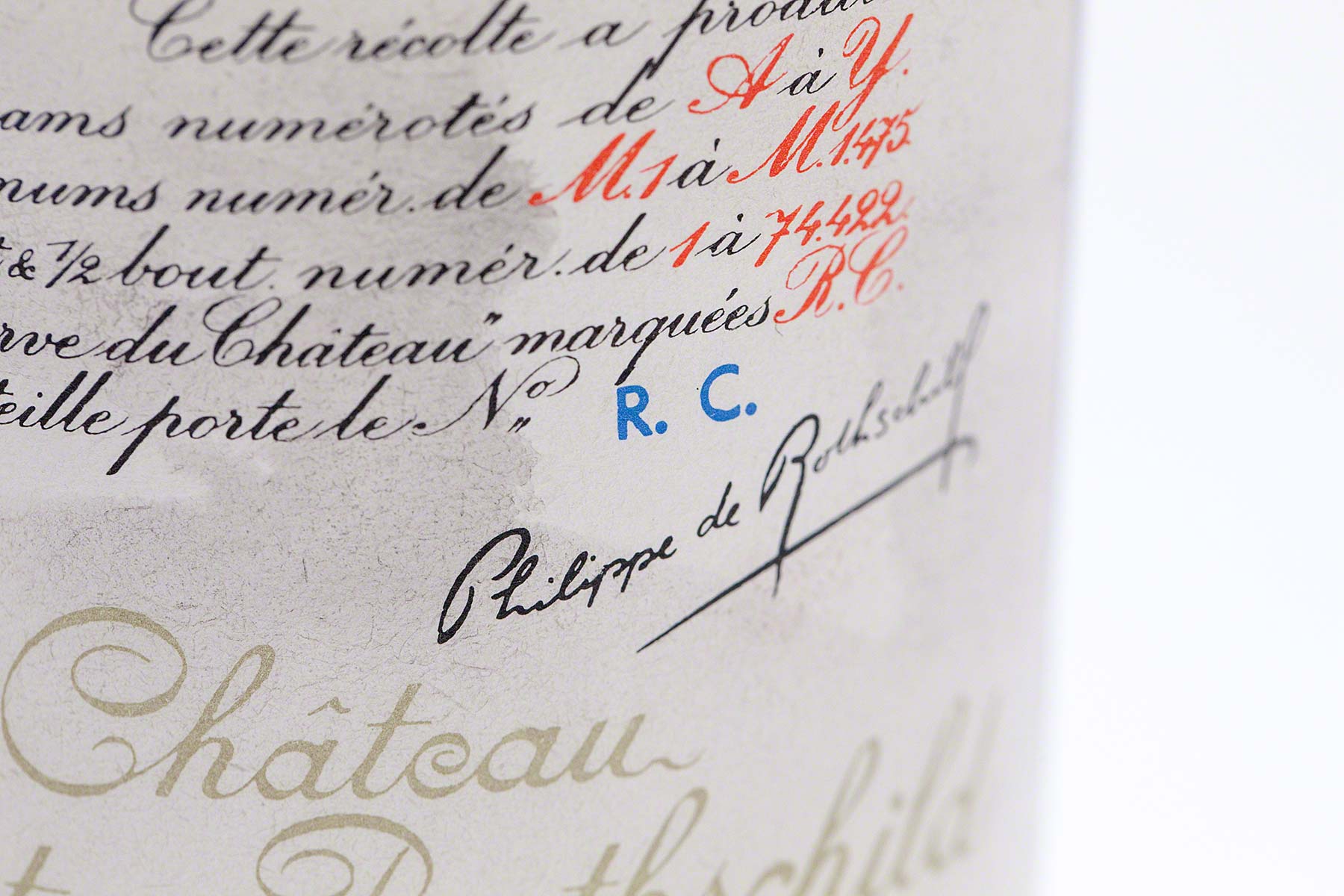
A Closer Look At The Reserve De Chateau For The 1945 Mouton Rothschild Special Bottling
Sometimes, the Bordeaux châteaus and merchants and also the Burgundy merchants and domaines have complicated matters regarding the differentiation between a wine bottled at origin and one bottled elsewhere. This problem occurs when they have supplied their original labels, capsules, and even corks to the importer. Usually, it was only labels that were sent, but I have seen all 3 on a foreign bottle! A useful clue to show that the bottling is foreign is the original label will not state that the wine was bottled at the château or domaine as would normally be the case. I have seen Château Pétrus labels from the 1945 and 1947 vintages, for example, on Belgian and UK bottles with the original labels but without the statement “mise en bouteilles au château”. The risk of confusion is decreased when different labels are used than those from the producers. Thankfully, this is a common enough occurrence.
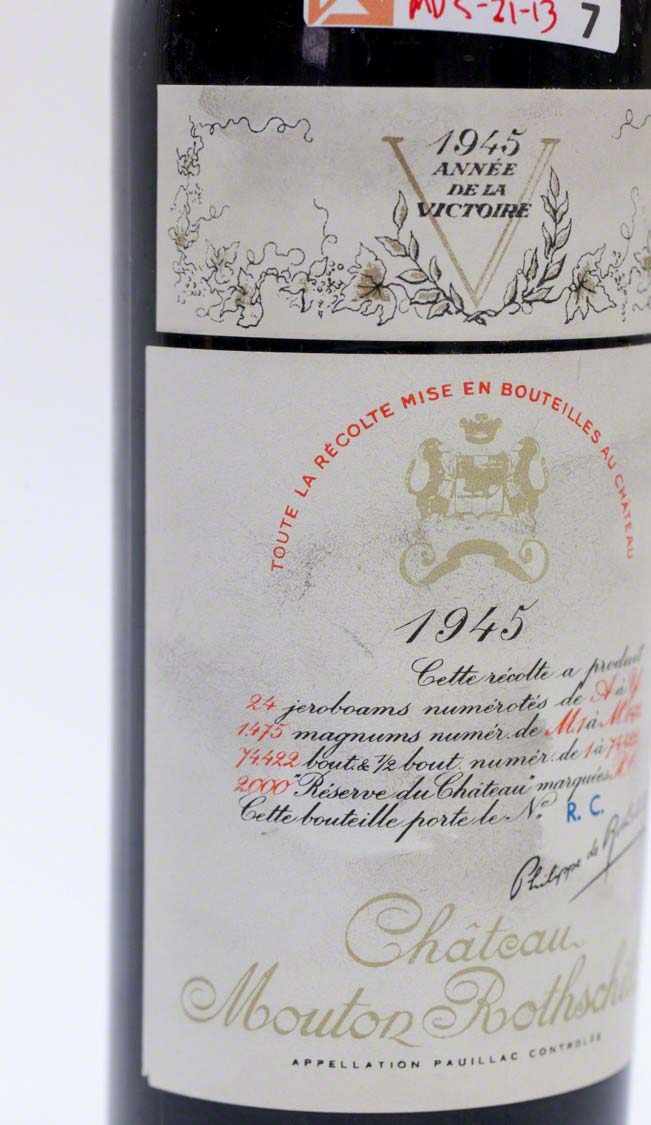
1945 Mouton Rothschild Reserve De Chateau Special Bottling
Perhaps the most awkward situation arises with “guerrilla” bottlings. This is when households rather than importers have bottled great wine (e.g., Château Cheval Blanc 1921 and 1947 and Château Lafleur 1947). I have seen such bottlings in situ in Belgium where the owners or their antecedents have managed to purchase the wine in barrels and perform the bottlings themselves. These are very much amateur bottlings and always need to be tasted to confirm that their condition is acceptable. One owner was convinced that the Château Cheval Blanc 1947 he had purchased in barrel only needed to be filled to mid shoulder in each bottle! Also, often the bottles do not have any closures as they were destined only for home consumption. This is a problem for resale given the fragility of the corks. Although such bottlings have appeared on the market, mainly at auction, they were sold in their context and would not necessarily be candidates for resale.
Aside from the 19th century and early 20th century First Growths, the value of wines that are not château, domaine, or origin bottled is lower. One can usually discount their value by half. Nowadays, all the top châteaus and domaines bottle their wines themselves and so these bottling variations no longer exist. Bulk wine shipping continues and Bordeaux and Burgundy is still bottled in other areas of France or in other countries. The supermarket group Delhaize in Belgium still bottles some of its entry-level wine such as Chablis. Given the history of the fine wine trade, it is not so unusual to find these older “special” bottlings still in circulation. The only issue is that when buying, one has to take into account the difference in value between origin and other bottlings so as not to be duped.