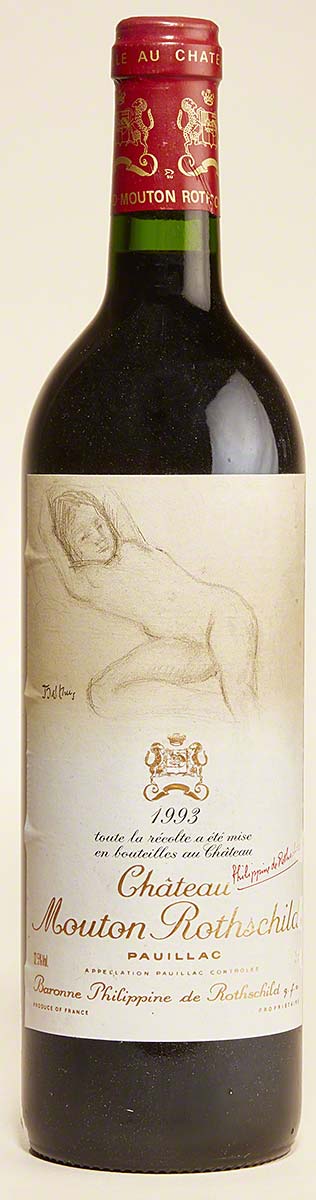
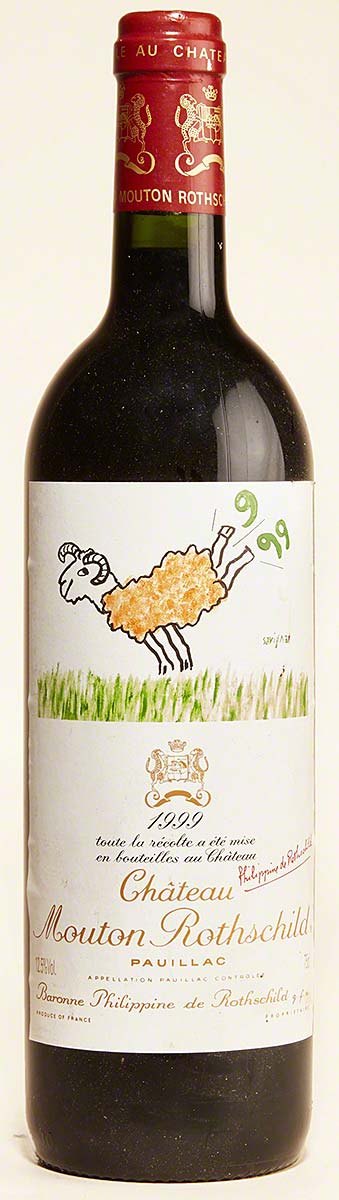
Provenance
Every wine bottle has a story: the story of how it goes from the vineyard to the glass. Many fine wines will not go directly from the producer straight to the cellar of it’s lifetime owner, instead, many will find themselves going through distributors, auctions, wine shops, owned by multiple people, restaurants, and eventually opened for enjoyment. In the latter case, authenticity of the bottle becomes paramount as the number of hands that have touched it have grown, and buyers only want bottles that have only cellared in ideal aging conditions. When counterfeit wines enter the marketplace, they have a separate origin of their authentic counterparts, and therefore need a back story of how they came to their current owner. In the case of Rudy Kurniawan, he had supposedly been a collector for decades, while only being in his twenties. Stories like this throw up red flags, and bring provenance into question when looking at a wine’s authenticity.
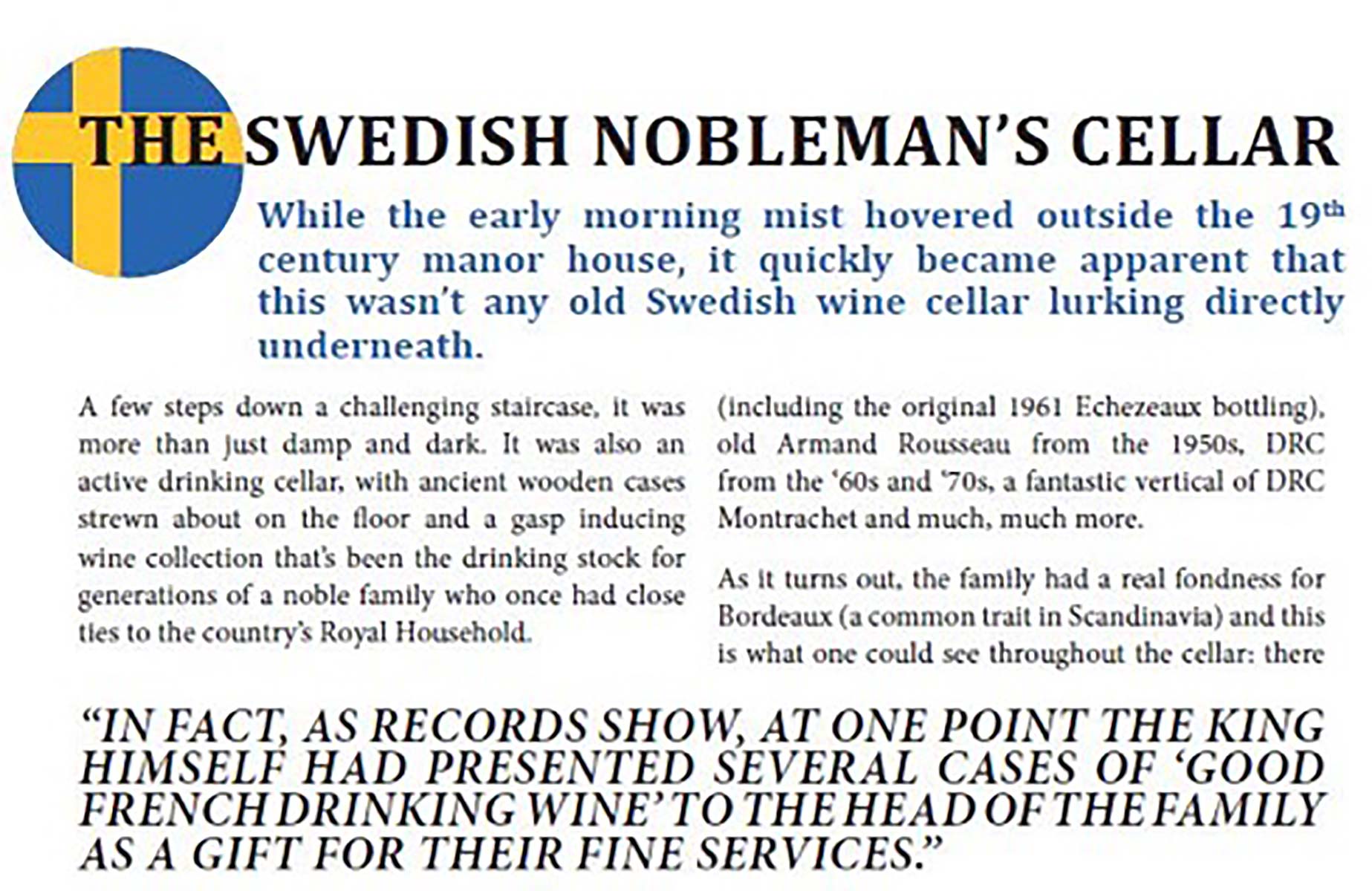
All authentic wines originate at the producer’s domaine, bottling site, or a negocient. All counterfeit wines originate by the hands of a person. In these cases, this counterfeiter will attempt to provide a story, a path, or an untraceable link from the producer to present day. While current wine buying has all the technological benefits of receipts, email confirmations, software based supply chain and sales, and account statements, these are relatively new advancements in purchasing habits. The older the wine, the longer it has had without these tools, and the more questions that can arise. Provenance fairy tale stories come in many styles, but they always include anonymous and vague sources, and beautiful collections that were thought to not be possible to exist. In today’s environment, the producers, public, and quite frankly, everyone with an interest can know who the biggest wine collectors in the world are. Bill Koch has one of the greatest collections in the United States, and buyers with the money and access to the most fantastic wines ever created will not be completely unknown. Only a small percentage of the world has the interest and the financial capability to create wonderful collections. With that said, new historical collectors that have been building cellars for generations are one of the most common fake provenance stories that come out. Nobleman and old royal families that no longer serve a country are spouted as collecting straight from the producers generations ago, and are just now, showing an interest in selling their wines. Hidden cellars are another one of the most common ways to spin a counterfeit lot. Hardy Rodenstock famously happened upon many boarded up, hidden, and forgotten about cellars that contained bottles of wine owned by Thomas Jefferson, and famously fine wines. Using World Wars in Europe, and even more so the invasion of Nazi Germany leading French families, restaurants, and businesses out of their homes and businesses, their cellars were concealed behind brick walls, and then the owners never returned. Decades passed, and new owners never knew that wall was covering up highly collectible wines. While these stories are romantic, and offer a beautiful story, the “discoverer”of these wines never names the homes, the restaurants, the royal family, and under the vague details, there is no way to verify if these people, places, and stories hold any truth. In the example of the Titanic- it famously had a wonderful wine collection on board, and it still sits deep in the sea. Rare, fine, and old collections are often known, and rarely catch the industry off guard.
Provenance can be very helpful when selling a bottle of wine in that it can help fetch higher prices for wines. In the case of Bill Koch’s most recent sale, his gorgeous cellar was featured, his famous overhaul of ridding all counterfeit bottles, and his litigious history proves he has zero tolerance for counterfeits, and is very diligent in getting his bottles authenticated. There is a higher level of trust in these sales, which will encourage the buyers. Sneaky, vague provenance can hinder a sale.
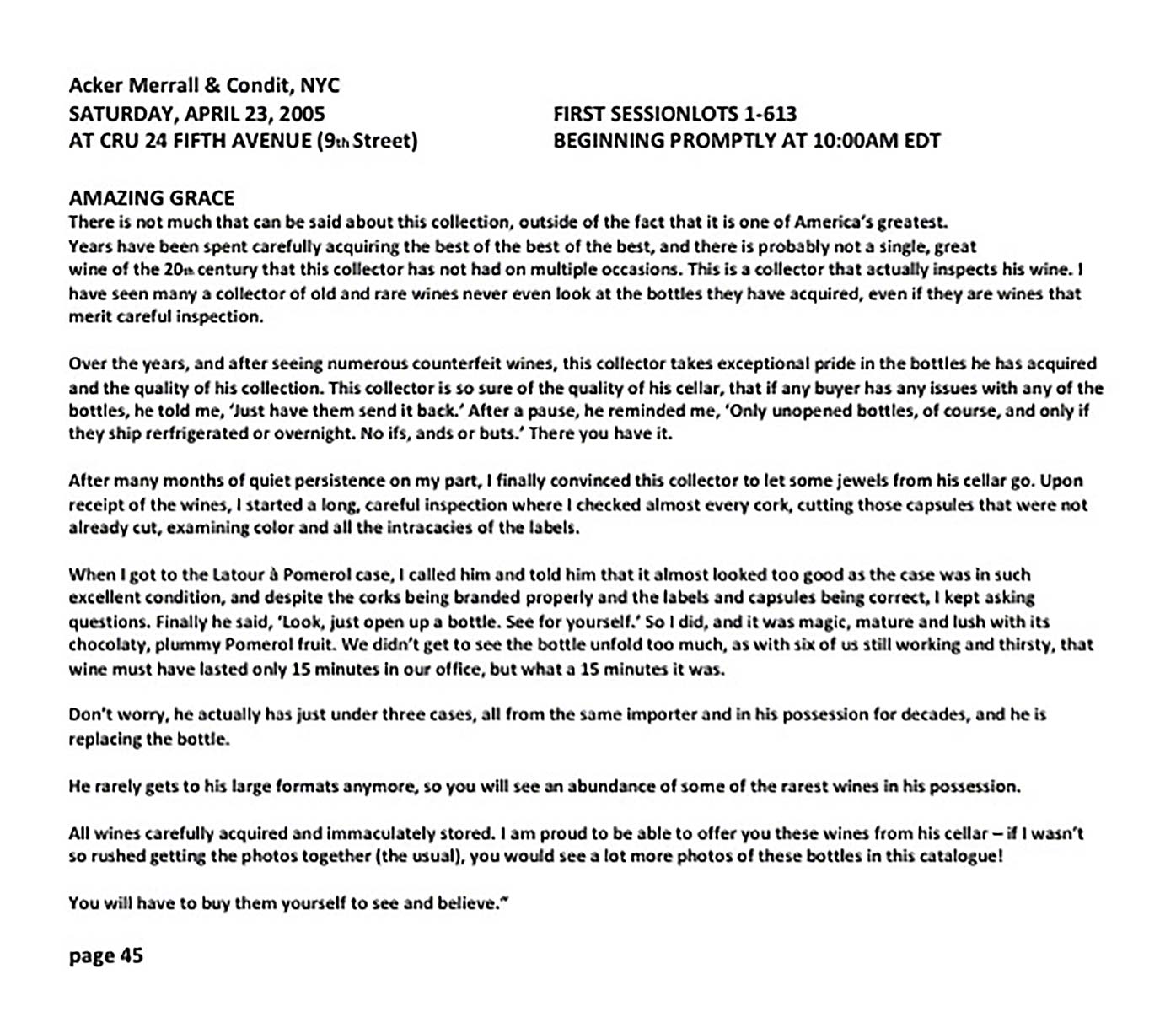
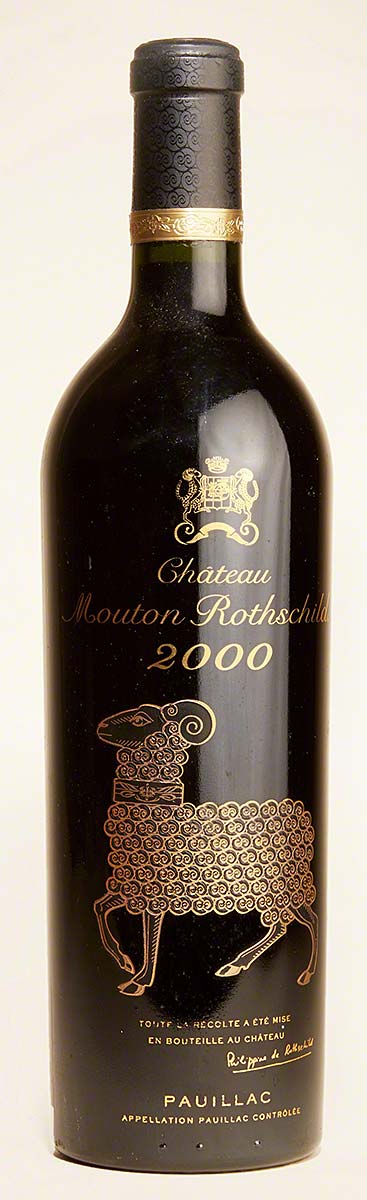
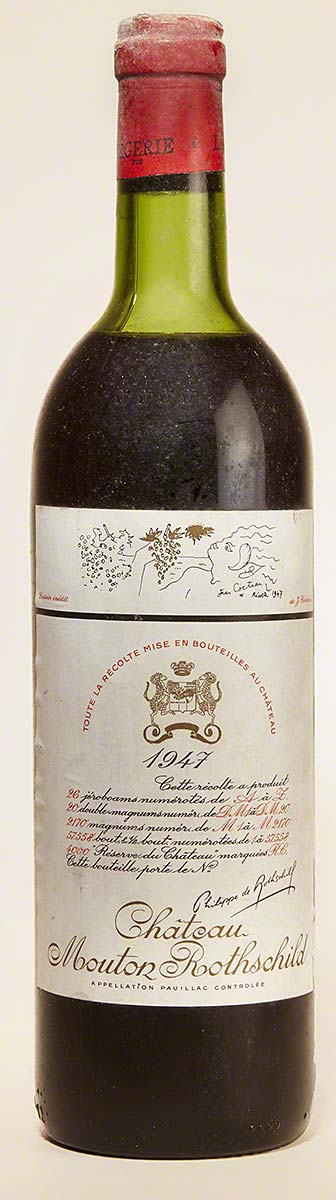
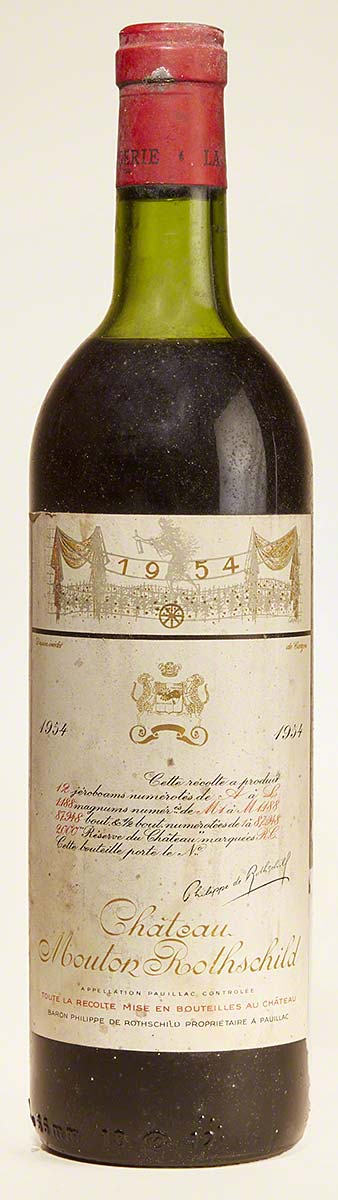
Ownership can also play a large part in looking at the authenticity of a bottle. Buying a bottle of wine from an auction like Acker, should raise more red flags after their well-documented history of selling counterfeits. Proximity to counterfeiters and those that aid them should bring red flags into the provenance of a wine.
While most of the other sections cover one aspect of a bottle, provenance can be showed in all aspects, but also in accompanying documents like receipts. Capsules have specific tops for wines that have been allocated to France. Import labels show where the wine came in, and whether that importer matches the distribution rules.
“There is no such thing as a counterfeit wine that does not come with a counterfeit tale of provenance”